

Water damage in your home can occur from several sources, including leaky roofs, faulty plumbing, and appliance malfunctions. Burst pipes often result from freezing temperatures or high pressure, while poor drainage can lead to foundation cracks. Don't forget about humidity issues, which promote mold growth, and potential sewer backups caused by clogs. Weather-related damage can infiltrate your home if it isn't sufficiently protected. To prevent these problems, perform regular inspections, maintain appliances, and guarantee proper gutter systems. Taking proactive measures preserves your space and finances, and there's more you can do to safeguard your home against these threats.
Leaky Roofs

Leaky roofs can be a homeowner's worst nightmare, leading to significant water damage and costly repairs. To prevent this, regular roof inspections are crucial. By checking your roof at least twice a year, you can identify potential issues early, such as cracked shingles or damaged flashing. Moreover, be aware that some insurance policies may cover specific storm-related damages, so understanding your coverage can help you prepare for unexpected repairs understanding insurance policies. Don't wait for a storm to reveal these problems; proactive maintenance is key to preserving your home's integrity.
In addition to inspections, employing effective weatherproofing techniques can make a world of difference. Start by ensuring your roof's drainage system is clear and functional. Clogged gutters can lead to water pooling, increasing the risk of leaks. In addition, consider applying a waterproof sealant to vulnerable areas, especially around chimneys and vents.
Don't overlook the importance of proper ventilation in your attic, either. Good airflow prevents moisture buildup, which can weaken your roof structure over time. By taking these steps, you not only protect your home from water damage but also free yourself from the stress of unexpected repairs. Adopt this proactive approach, and you'll enjoy peace of mind knowing your roof is a strong shield against the elements.
Faulty Plumbing
Faulty plumbing is a leading cause of water damage in homes, and it often stems from common issues like leaking pipes or broken fixtures. Regular maintenance is essential to identify potential problems before they escalate, saving you time and money. Engaging in proper water extraction and drying techniques can help mitigate risks associated with faulty plumbing immediate mitigation steps. Keep an eye out for signs of damage, such as water stains or mold growth, so you can address them promptly.
Common Plumbing Issues
When it comes to water damage in homes, common plumbing issues can often be the root cause. One significant problem is pipe corrosion, which occurs when age, rust, or mineral buildup weakens pipes over time. If you notice discolored water or leaks, your pipes might be corroded. Addressing this early can save you from costly repairs down the line.
Another critical factor to evaluate is water pressure. High water pressure can strain your plumbing system, leading to leaks and burst pipes. If your water pressure exceeds 60-70 psi, it's time to take action. Installing a pressure regulator can help maintain a safe level, protecting your pipes from unnecessary stress.
Don't overlook the importance of regular inspections. Even seemingly minor issues can escalate into significant problems, causing water damage and compromising your home's integrity. Keep an eye out for signs like damp spots, mold, or unusual sounds in your plumbing system. By being proactive and addressing common plumbing issues, you can liberate your home from the threat of water damage and maintain a safe, comfortable environment for you and your family.
Regular Maintenance Importance
Regular maintenance is crucial for preventing water damage caused by faulty plumbing in your home. By staying proactive, you can identify potential issues before they escalate into costly repairs. Start by scheduling seasonal inspections to verify your plumbing system is functioning correctly. These inspections can help you catch leaks, corrosion, or other problems that might otherwise go unnoticed.
Creating a maintenance checklist is a great way to stay organized. Include tasks like checking for dripping faucets, inspecting under sinks for water stains, and monitoring your water pressure. Remember to likewise examine hoses connected to appliances like your washing machine and dishwasher; wear and tear can lead to leaks.
Don't forget to flush your water heater annually to prevent sediment buildup, which can cause pressure issues. Furthermore, consider keeping an eye on your home's water meter. A sudden spike may indicate a hidden leak.
Signs of Damage
Noticing the signs of damage from faulty plumbing can save you from considerable headaches down the line. Being proactive about these warning signs helps you maintain a safe, comfortable living environment. Here are three key indicators to watch for:
- Water Stains: Look for discoloration on walls and ceilings, which can indicate leaks from pipes or fixtures. These stains can worsen if left unchecked.
- Musty Odors: If you detect a damp, musty smell, it's often a sign of mold or mildew growth because of moisture accumulation from leaks. Don't ignore these odors; they can greatly impact your health.
- Unexplained Water Puddles: Regularly check for puddles in areas where water shouldn't be pooling, like under sinks or near appliances. This could point to a leaking pipe or malfunctioning appliance.
Burst Pipes
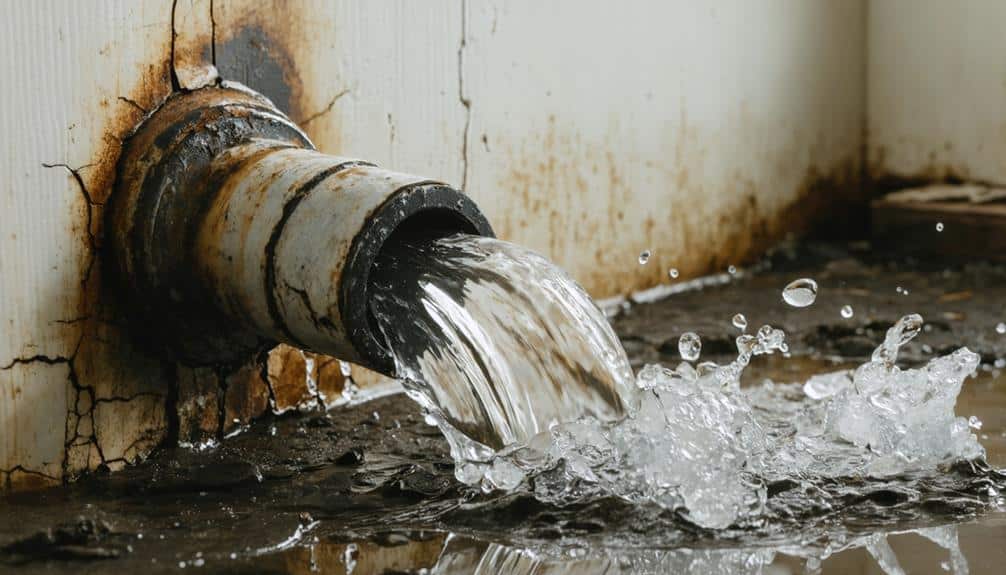
Burst pipes can lead to significant water damage in your home, often caused by freezing temperatures, excessive pressure, or corrosion. Understanding these common causes is crucial for prevention and maintaining your plumbing system. In the following sections, you'll find practical tips to help you avoid the costly consequences of burst pipes.
Common Causes Explained
Experiencing a burst pipe can be a homeowner's worst nightmare, leading to significant water damage if not addressed quickly. Understanding the common causes of burst pipes can empower you to take action before disaster strikes. Here are three main culprits:
- Freezing Temperatures: When temperatures drop, water inside pipes can freeze, expand, and eventually burst the pipe. Insulating your pipes is essential during winter months.
- Corrosion: Over time, pipes can corrode as a result of poor water quality. Regularly checking the condition of your plumbing can help identify issues before they escalate.
- High Water Pressure: Excessive pressure can weaken pipes, making them prone to bursting. Installing a pressure regulator can help maintain safe levels.
Being aware of these factors is part of effective emergency preparedness. Regular maintenance checks can save you from the chaos of unexpected leaks and the subsequent damage they cause. Remember, staying informed about your home's plumbing system and ensuring good water quality are imperative in preventing burst pipes. Take charge, and protect your home from potential water damage!
Prevention Tips Provided
To prevent burst pipes and the costly water damage they can cause, it's crucial to implement a few proactive measures in your home. First, insulate your pipes, especially those in unheated areas like basements and attics. This will help maintain a stable temperature and reduce the risk of freezing.
Next, consider installing water sensors in areas prone to leaks, such as near washing machines and under sinks. These devices alert you to moisture before it escalates into a bigger problem.
Also, check for any signs of wear or corrosion on your pipes regularly. Don't wait for a problem to arise; replace aged or compromised pipes proactively.
If your home is in a colder climate, let faucets drip slightly during extreme cold spells to relieve pressure within the pipes.
Appliance Malfunctions
Malfunctioning appliances can wreak havoc on your home, leading to significant water damage if left unchecked. It's vital to be proactive, especially considering the appliance age. Older machines are more prone to issues, which can result in leaks or bursts. Regular maintenance and inspections can help mitigate risks associated with common causes of water damage and guarantee your appliances function effectively. To safeguard your home, here are three fundamental preventive measures:
- Regular Inspections: Check hoses and connections for wear and tear. Look for any signs of leaks or corrosion that could indicate potential problems.
- Install Water Sensors: Placing water sensors near appliances like washing machines, dishwashers, and refrigerators can alert you to leaks before they turn into major disasters.
- Maintain Appliance Cleanliness: Regularly clean your appliances to prevent blockages that may cause water to back up or overflow.
Poor Drainage
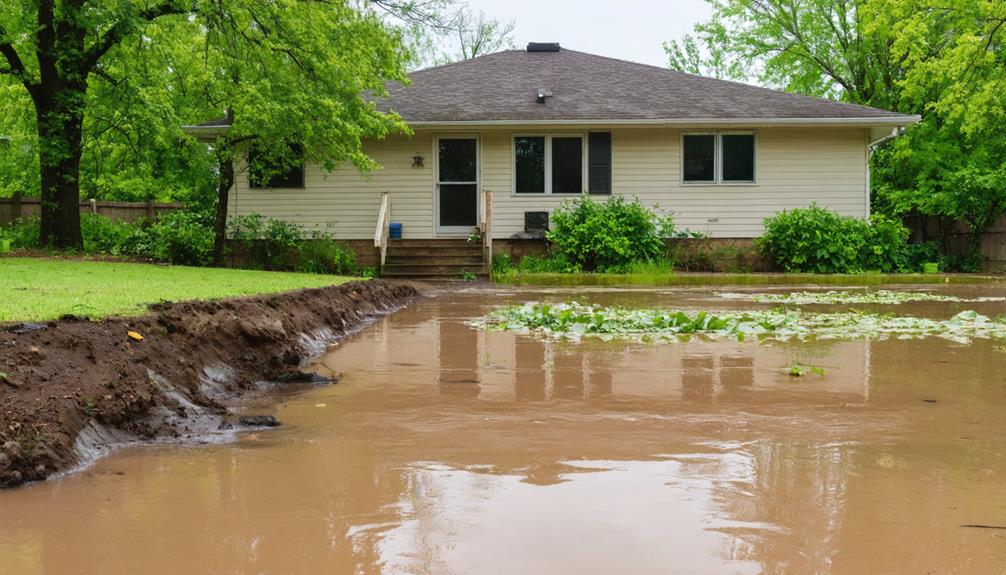
Poor drainage can lead to significant water damage in your home if you're not careful. Improper grading around your foundation can cause water to pool, while clogged gutters can overflow and direct water toward your walls. Addressing these issues promptly is essential to prevent costly repairs and protect your property.
Improper Grading Issues
Often, homeowners overlook the importance of proper grading around their properties, which can lead to significant drainage issues. When the land slopes toward your house instead of away from it, rainwater can pool around your foundation, causing water damage and encouraging soil erosion. Understanding effective grading techniques is vital for maintaining your home's integrity.
To prevent improper grading issues, consider these three key points:
- Evaluate your terrain: Assess the slope of your yard. Ideally, the ground should grade away from your foundation at a slope of at least 2% (or 1/4 inch per foot) to guarantee proper drainage.
- Implement proper drainage solutions: Use swales, trenches, or dry wells to redirect water away from your home. These features can help manage water flow and minimize erosion.
- Regularly inspect and maintain your yard: Keep an eye on any signs of soil erosion or shifting ground. Regularly adding soil or mulch can help maintain proper grading and protect your foundation.
Clogged Gutters Consequences
When your gutters become clogged, it can lead to serious drainage problems for your home. Clogged gutters prevent proper water flow, causing rainwater to overflow and seep into your foundation, leading to water damage. If you neglect gutter maintenance, you're risking mold growth, structural issues, and even pest infestations.
Improper drainage because of clogged gutters means water can pool around your home, promoting erosion and weakening the ground that supports your foundation. This can result in costly repairs and decrease your home's value. In addition, stagnant water can attract mosquitoes and other unwanted pests, creating a health concern for your family.
Regular gutter maintenance is vital to avoid these consequences. Clear your gutters of leaves, twigs, and debris at least twice a year, especially before heavy rain seasons. Installing gutter guards can likewise help keep debris out while allowing for uninterrupted water flow.
Flooding
How can flooding wreak havoc on your home? Flooding isn't just an inconvenience; it can lead to severe damage and costly repairs. When water invades your living space, it can compromise your structure, ruin your belongings, and create hazardous conditions. To safeguard your home, especially if you live in flood zones, consider these crucial steps:
- Get flood insurance: Verify you have adequate coverage. Regular homeowners' insurance often doesn't include flood damage.
- Elevate your home: If you're in a flood-prone area, raising your home on stilts or a platform can help mitigate risk.
- Install sump pumps: These devices can help prevent water from accumulating in your basement and protect your foundation.
Taking proactive measures can liberate you from the stress of flooding. Understanding your risk and preparing accordingly is vital. Don't wait for the next storm to hit; make certain you're ready. By prioritizing flood insurance and implementing preventive strategies, you'll protect your home and your peace of mind.
Humidity Issues
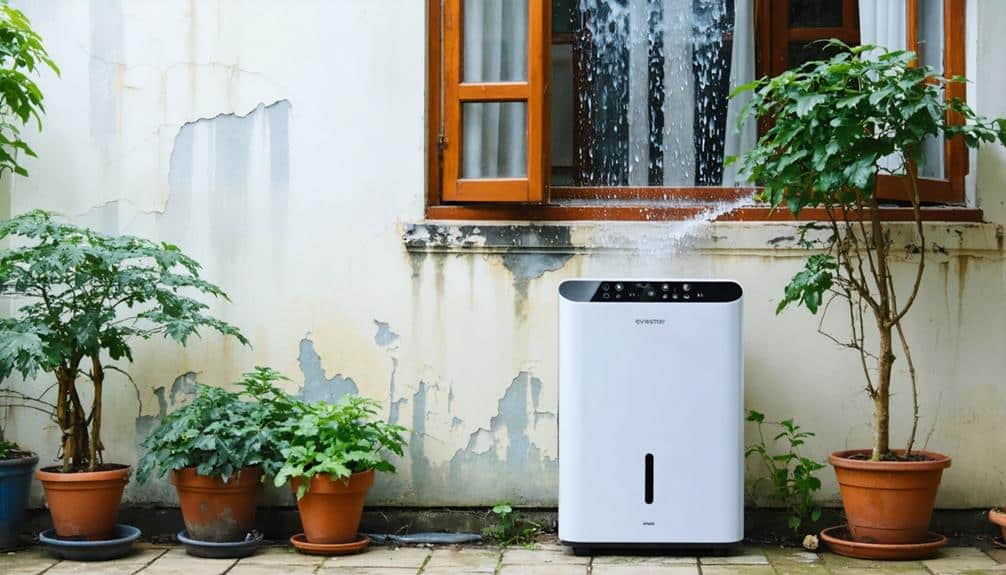
Excessive humidity can quietly wreak havoc in your home, leading to a range of issues that may not be immediately obvious. When moisture levels rise, it creates an ideal environment for mold and mildew to thrive, which can compromise your indoor air quality and health. You might notice musty odors or see dark spots on walls and ceilings—clear signs that humidity control is required.
To prevent these problems, it's crucial to implement effective moisture management strategies. Start by using dehumidifiers in areas prone to high humidity, like basements and bathrooms. Regularly check and repair any leaks in plumbing or roofs to eliminate sources of excess moisture. Ventilate your home properly; opening windows and using exhaust fans during cooking and showering can greatly lower humidity levels.
Furthermore, pay attention to your home's insulation. Poor insulation can lead to condensation, contributing to humidity issues. By actively managing moisture, you not only protect your home from potential water damage but likewise create a healthier living environment. Take charge of humidity control, and liberate your space from the hidden dangers of excess moisture.
Foundation Cracks
Foundation cracks are more than just unsightly blemishes; they can signal serious structural issues in your home. Ignoring them can lead to costly repairs and compromised structural integrity. When you notice these cracks, it's crucial to understand their causes, often stemming from foundation settlement.
To help you tackle this issue effectively, consider these three preventive measures:
- Maintain Proper Drainage: Verify that gutters and downspouts direct water away from your foundation. This prevents excessive moisture that can lead to soil erosion and foundation settlement.
- Monitor Landscaping: Keep flower beds and landscaping sloped away from your home. This minimizes the risk of water pooling near your foundation, which can worsen cracks.
- Control Soil Moisture: During dry spells, water the soil around your foundation. Uneven moisture levels can cause soil expansion and contraction, leading to cracks.
Sewer Backups
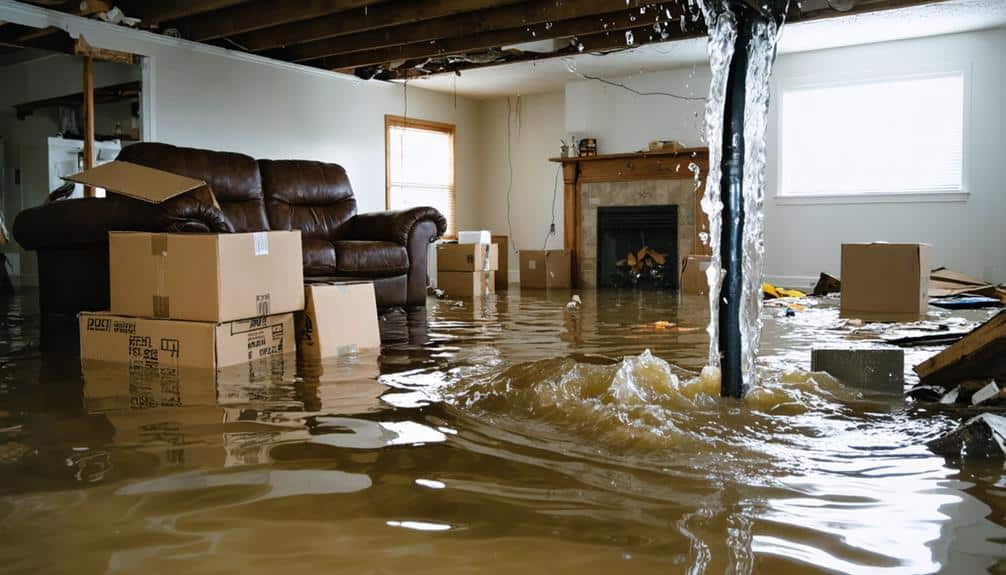
Sewer backups can create a nightmare scenario for homeowners, leading to considerable water damage and health hazards. When the sewer system becomes overwhelmed or blocked, wastewater can flow back into your home, contaminating your living spaces. It's vital to understand the potential causes, so you can take action to prevent them.
One common cause of sewer backups is tree roots infiltrating the pipes. Regularly inspect your yard and manage any trees near your sewer lines. Furthermore, avoid flushing non-biodegradable items like wipes or feminine products, as these can cause clogs. Be mindful of what goes down your drains—grease and food particles can accumulate over time, leading to blockages.
Backup prevention is fundamental. Consider installing a backwater valve to protect your home from sewer overflow. Regularly maintain your plumbing and have a professional inspect your sewer system at least once a year. By taking these proactive steps, you can considerably reduce the risk of sewer backups, ensuring a safer and healthier home environment. Don't wait for the issue to arise—take control and safeguard your home today!
Weather-Related Damage
When severe weather strikes, your home is at risk of significant water damage, especially if you're unprepared. To protect your sanctuary and improve climate resilience, you need to prioritize storm preparation. Here are three crucial steps to take:
- Inspect Your Roof and Gutters: Regularly check for leaks, loose shingles, or clogged gutters that can lead to water pooling and eventual damage.
- Seal Windows and Doors: Confirm that all entry points are properly sealed. Use weather stripping and caulk to keep water from infiltrating your home during heavy storms.
- Create a Water Barrier: If you live in a flood-prone area, consider building a barrier. Sandbags or flood gates can redirect water away from your foundation.
Conclusion
Water damage can sneak up on you like a thief in the night, but with the right precautions, you can keep your home safe and dry. By addressing leaky roofs, faulty plumbing, and other potential culprits, you're not just protecting your property; you're preserving your peace of mind. Stay vigilant and proactive, and you'll guarantee that your home remains a fortress against the ravages of water. Remember, an ounce of prevention is worth a pound of cure!
0 Comments