

The cost of water damage repair can fluctuate considerably depending on a few variables. Factors include the extent and type of water damage, along with the complexity of the restoration process. Smaller repairs could cost a few hundred dollars, but extensive restoration following a major flood may equate to thousands. It’s crucial to professionally assess the damage to understand these costs fully. Remember, insurance might cover some expenses, but this depends on your specific policy details. What’s most important is mitigation and repair should be done promptly to avoid further complications, of which more can be learned further along.
Understanding Water Damage
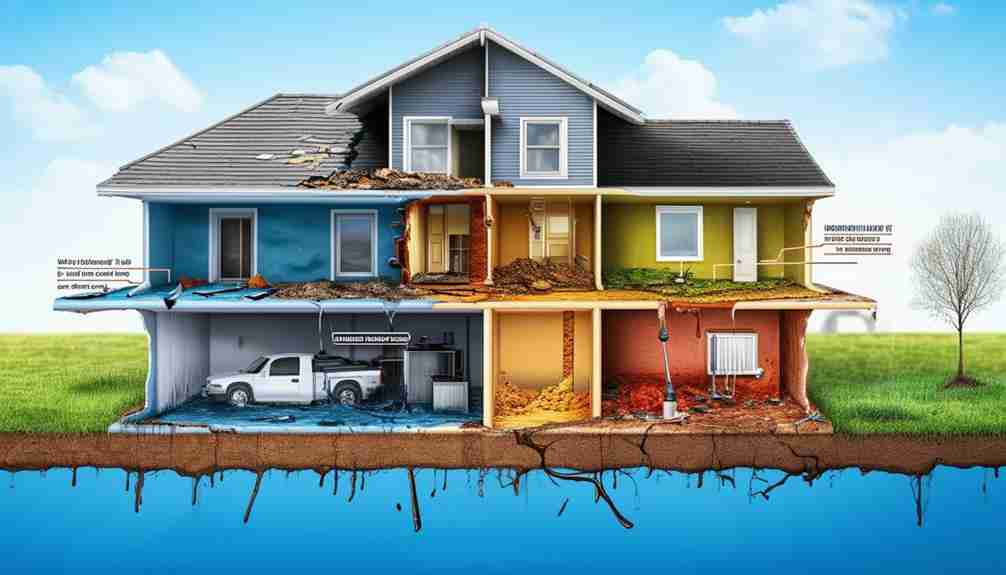
Understanding water damage is crucial, as it can greatly impact the overall cost of repair and restoration in your home or business. It’s not just about the visible signs such as peeling paint or warped floors; it’s equally important to consider the unseen effects that can compromise the structural integrity of your property.
Water sources are numerous. They can range from natural disasters like floods and hurricanes, to more mundane things like leaking pipes or faulty appliances. Regardless of the source, water has the potential to cause severe damage.
Damage effects vary depending on the water source and the duration of exposure. Prolonged contact with water can lead to structural damage, mold growth, and even electrical issues. These effects can be costly to repair, not to mention potentially dangerous.
Common Causes of Water Damage
There are several common causes of water damage you should be aware of, ranging from environmental factors to home maintenance issues. Natural disasters such as heavy rain or flooding can cause significant water damage. These damage sources can be unpredictable and require emergency responses to prevent further harm.
Don’t overlook the issues that can occur right in your home. Leaky pipes or faulty appliances like dishwashers and washing machines can also cause water damage. Even a small leak can lead to extensive damage if left unattended. The bathroom and kitchen are particularly susceptible because of their frequent water usage.
Temperature changes can cause pipes to burst, especially during winter. Insulating your pipes can help prevent such incidents. Blocked gutters can also lead to water seeping into your home, causing damage both externally and internally.
The Process of Damage Assessment

Evaluating the extent of water damage starts with a thorough examination of the affected area, pinpointing the source of the problem and determining the level of harm it has caused. This critical step in the repair process is known as damage assessment. You’re not alone in this; professionals are trained to assess the damage severity accurately.
In essence, the damage assessment process involves a detailed inspection of your property, identifying and documenting the type and extent of the water damage. These professionals will also determine the required steps for effective restoration, creating a clear roadmap for the repair work needed.
One of the main outcomes of this assessment is cost estimation. This provides you with an idea of the financial implications involved in restoring your property to its former state. The cost estimation takes into account various factors like the extent and nature of the damage, size of the affected area, and the materials required for repair.
Different Types of Water Damage
You must understand the different types of water damage to assess repair costs accurately. Each type has distinct impacts, which influences the repair process and its expense. Let’s begin with identifying these water damage types and discussing the impacts of various damages.
Identifying Water Damage Types
Before delving into the costs associated with water damage repair, it’s important to understand the different types of water damage that can occur in your home or business. Damage detection can be tricky, as water damages aren’t always immediately visible. It’s vital to regularly monitor moisture levels in your property to catch any potential issues early.
There are three main types of water damage: clean water damage, grey water damage, and black water damage. Clean water damage is caused by rainwater or leaky pipes and is typically considered safe. Grey water damage, on the other hand, is slightly contaminated, often from washing machines, dishwashers, or bathroom sinks. This type of water may pose a health risk if not dealt with promptly.
Lastly, black water damage is the most severe and dangerous. This type of damage comes from highly contaminated sources like sewage or floodwaters and can lead to serious health issues if not addressed correctly.
In identifying these types, understanding the source of water damage is crucial. Each type requires a specific treatment and repair approach, which directly influences the overall repair cost. By accurately identifying the type of water damage, you can better anticipate the potential repair expenses.
Impact of Various Damages
Understanding the impact of different types of water damage can help you mitigate the consequences and manage repair costs more effectively. The severity and extent of damage vary depending on the source and type of water involved, each requiring specific drying techniques and damage mitigation strategies.
Clean water damage, often resulting from pipe leaks or rainwater, is the easiest to deal with. The drying process is relatively straightforward, and the risk of contamination minimal. But, don’t be complacent. If left untreated, it can escalate into more serious damages.
Grey water damage, on the other hand, involves slightly contaminated water, like that from dishwashers or washing machines. This necessitates more thorough cleaning and sanitization, increasing your repair cost.
Black water damage, from sources like sewage backups or flooding, poses severe health risks and requires professional handling. Here, damage mitigation becomes a matter of safety as much as cost management.
Being aware of these differences empowers you to take timely action, choose the right drying techniques, and control your repair costs. After all, knowledge is your first line of defense against the costly aftermath of water damage.
Cost Factors in Water Damage Repair

When determining the cost of water damage repair, several key factors come into play, including the extent of the damage, the type of water involved, and the required restoration process. A thorough damage evaluation is important to assess these elements accurately. The level of damage could range from minor leaks to extensive flooding, and each requires a different repair strategy and therefore, varied costs.
The type of water involved also impacts the price. Clean water from a burst pipe may need less intensive treatment than grey or black water from sewage or flood, which involves health hazards and requires specialized cleaning.
Furthermore, the complexity of the restoration process significantly influences the repair timeline. Simple drying and dehumidification might wrap up in a few days, but replacing damaged structures like walls or floors can prolong the process, thereby increasing the cost.
How Insurance Covers Water Damage
So, how does insurance cover water damage? It’s important to understand the insurance claims process and what you’re entitled to. When water damage occurs, you’ll need to file a claim with your insurer promptly. This will involve providing evidence of the damage, such as photos or videos, and detailing the extent of the damage in a statement.
Your insurer will then send an adjuster to assess the damage and confirm its cause. It’s vital to be aware of coverage limitations. These restrict the types of water damage your policy will cover. For instance, many policies cover sudden and accidental water damage, like a burst pipe or overflow. However, they may not cover gradual damage, such as leaks that have been ignored over time.
Moreover, damage caused by natural disasters like floods usually requires additional flood insurance. It’s, therefore, necessary to familiarize yourself with your policy’s specifics. Understanding these details will help you navigate the claims process more effectively, ensuring you get the assistance you need to handle water damage repair costs. The key is to stay informed and proactive.
Ways to Prevent Future Water Damage

As you move forward, it’s crucial to focus on preventing future water damage to save on repair costs. Regular home inspections are key, as they can identify potential problems before they become significant issues. It’s equally important to implement preventive measures and fully understand the risks associated with water damage.
Regular Home Inspection Importance
Regularly scheduling a home inspection can greatly reduce the risk of future water damage, emphasizing the significance of this essential measure in maintaining the integrity of your property. Determining the right inspection frequency and installing water detectors are vital steps in this process.
To fully grasp the benefits of regular inspections, let’s consider the following points:
- Early Detection: Regular inspections can help spot potential issues before they escalate, saving you from costly repairs and the stress of dealing with extensive damage.
- Preventative Action: Once potential problems are identified, you can take necessary steps to prevent water damage, which includes detector installation in sensitive areas.
- Long Term Savings: Inspections come with a cost, but they ultimately save you money in the long run by preventing severe water damage.
- Peace of Mind: Knowing your home is safe from potential water damage allows you to live with less worry, ensuring a sense of belonging and security.
Implementing Preventive Measures
Having recognized the importance of regular home inspections in mitigating water damage, it’s time we discuss practical steps you can take to further prevent such issues in your property. The truth is, you’re not alone in this – we’re in this together.
One of the most effective preventive measures is investing in waterproofing solutions. These can be applied to your basement, kitchen, bathroom, and other areas prone to water damage. Waterproofing not only protects your home from water intrusion but also keeps it dry and safe, even in the face of heavy rainfall or flooding.
Next, consider your local climate. Climate considerations are vital for water damage prevention. If you live in an area prone to heavy rains or snow, for instance, make sure your roofing system is robust and your gutters are free from debris. On the other hand, in dry, hot climates, regular checks for pipe leaks and excessive condensation are important.
Understanding Water Damage Risks
To safeguard your home from future water damage, it’s crucial to understand the potential risks and how they can directly impact your property. Understanding these risks is a vital part of risk management. By having a deeper understanding of these risks, you can implement preventive measures to avoid the severe damage implications that come with water damage.
Here’s a simple breakdown to guide you:
- Plumbing Problems: These are perhaps the most common cause of water damage. Regularly check your pipes, faucets, and hose bibs for signs of wear and tear.
- Weather and Natural Disasters: Heavy rains, hurricanes, and floods can cause significant water damage. It’s important to have a robust disaster management plan in place.
- Roof Damage: A damaged roof can let in rainwater, leading to substantial damage. Regular roof inspections can help detect and fix issues early.
- Appliance Malfunctions: Old, faulty, or improperly maintained appliances can leak, causing water damage. Regular maintenance can prevent these issues.
Conclusion
Wrapping up, understanding and preventing water damage can literally save your world from going under. Remember, the cost of repairs is influenced by various factors, and insurance coverage varies. Stay vigilant, keep your property maintained, and you might just dodge the costly bullet that is water damage. Ultimately, it’s your wallet, your peace of mind, and your sanctuary at stake. Don’t let a drop of neglect flood your life with unnecessary expenses.
0 Comments