

To spot early signs of water damage in your home, check for discoloration on walls and ceilings, which may indicate leaks. Look for peeling or bubbling paint, as this suggests moisture underneath. Stains on baseboards signal prolonged exposure to water, while warped or buckled floors indicate potential underlying damage. Pay attention to musty odors; these often point to hidden moisture or mold. Finally, inspect for soft or spongy walls and dripping pipes. Act promptly on any of these signs to prevent costly repairs and guarantee a healthier living space. There's more helpful information waiting for you.
Discoloration on Walls

Discoloration on walls is often one of the earliest indicators of water damage in your home. When you notice dark spots, streaks, or patches, it's vital to act quickly. These changes typically signal underlying moisture issues that may compromise your living space's integrity. Regular wall maintenance can help you stay ahead of potential problems, allowing for prompt moisture detection before it escalates. Ignoring these signs can lead to serious structural issues and costly repairs, so vigilance is key.
As you inspect your walls, pay attention to any unusual color variations. These can arise from leaks, condensation, or even mold growth, all of which can have detrimental effects on your health and property. If discoloration is present, it's important to trace the source of the moisture. This could involve checking plumbing, roofs, or windows.
Don't overlook the importance of maintaining a consistent watch on your walls. By understanding the significance of these discolorations, you're empowered to take the necessary steps to protect your home. Addressing these signs promptly can save you from more extensive repairs and guarantee a healthier living environment. Your proactive approach to wall maintenance can liberate you from the stress of potential water damage, creating a more secure space for you and your family.
Peeling or Bubbling Paint
Over time, you might notice peeling or bubbling paint on your walls, which can be a clear sign of water damage lurking beneath the surface. This phenomenon often arises when moisture seeps into the paint layer, leading to a breakdown of paint quality. Addressing these issues promptly is essential, as they can indicate more significant problems, such as leaks or poor ventilation. Furthermore, understanding the impact of water damage on your home can help motivate timely action.
When you observe these symptoms, consider the condition of your interior maintenance practices. Regularly inspecting your home for signs of moisture can prevent paint deterioration and safeguard your walls. Bubbling paint typically signifies trapped moisture, which can compromise the integrity of your walls and lead to mold growth.
If you're dealing with peeling paint, remove the damaged sections and inspect the underlying materials for moisture. This process not only improves aesthetics but likewise promotes longevity in your home's structure. Ensuring high paint quality during your next interior maintenance project can likewise create a better barrier against moisture, helping to maintain a healthier living environment. By taking these steps, you empower yourself to combat potential water damage before it escalates.
Stained Ceilings
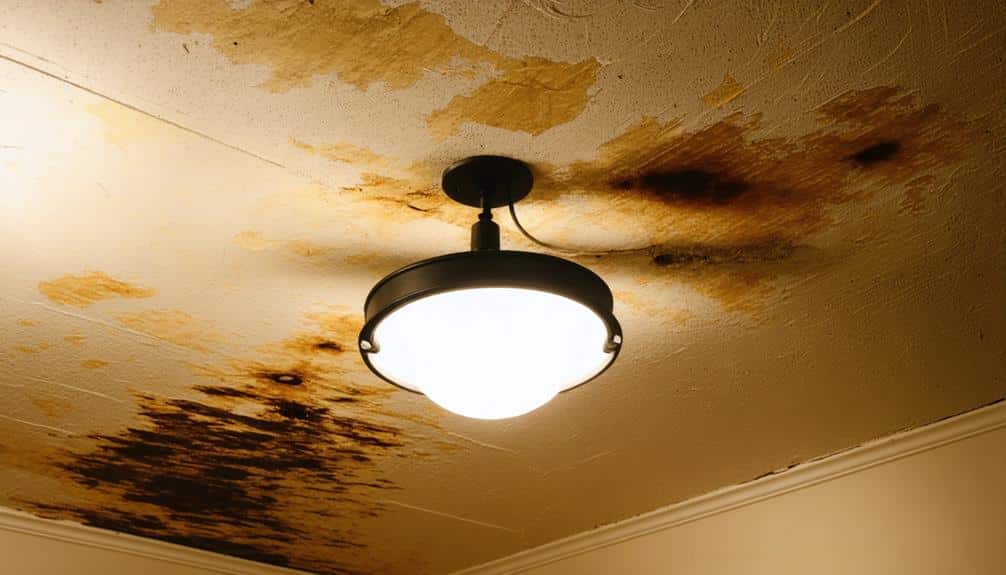
When you notice stained ceilings, it's essential to pay attention to color variations and patterns that could indicate underlying water issues. Regular inspections are necessary to catch issues before they escalate, as early identification of leaks aids in prevention and effective repair planning. Changes in texture on the surface may likewise signal moisture intrusion, which can lead to more severe damage if not addressed. Furthermore, look for signs of mold growth, as this can be a clear indicator of prolonged water exposure that requires immediate action.
Color Variations and Patterns
Water damage often manifests through subtle shifts in color and texture, particularly on ceilings. As you assess your home, look for signs of color fading, which may indicate prolonged exposure to moisture. A ceiling that once appeared uniformly white could display patches of yellow, brown, or gray. These discolorations are often the first indicators of a leak or water intrusion, warning you to investigate further.
Be mindful of pattern irregularities as well. If you notice streaks or spots that disrupt the expected uniformity of your ceiling, it's essential to take action. These patterns can emerge from water seeping through paint or drywall, creating unsightly marks that may worsen over time. Not only do these variations compromise your home's aesthetic, but they likewise signal underlying issues that could escalate into significant damage.
Ensure you check areas around fixtures, vents, and corners, where moisture tends to accumulate. Recognizing these color variations and patterns early can empower you to address potential problems before they lead to more extensive repairs, safeguarding your living space and promoting a healthier environment.
Texture Changes in Surface
You might notice changes in the texture of your ceilings as a telltale sign of water damage. During your surface inspection, look for any irregularities such as bubbling, peeling, or sagging. These texture changes often indicate underlying issues, such as persistent moisture intrusion. A thorough texture analysis can reveal much about the severity of the damage.
When examining your ceilings, pay close attention to areas that appear discolored or warped. Stains may develop from water pooling, leading to a compromised surface. You might as well find that paint or plaster begins to flake away, further illustrating the need for immediate action.
If you observe these signs, it's essential to address them promptly. Delaying repairs can result in more extensive damage and costly repairs down the line. Understanding the relationship between texture changes and water damage empowers you to take control of your home's integrity. By staying vigilant and conducting regular surface inspections, you can protect your living space from the debilitating effects of water damage. Remember, early detection is key to maintaining a safe and healthy environment.
Mold Growth Indicators
The presence of stained ceilings often signifies the alarming onset of mold growth, a serious concern for any homeowner. These stains typically appear as yellow or brown patches, indicating moisture intrusion that can encourage mold development. When you notice these discolorations, it's vital to act swiftly to prevent further damage.
Identifying the source of the moisture is your first step. It could stem from leaky roofs, plumbing issues, or high indoor humidity levels. Maintaining indoor humidity below 60% is critical for mold prevention. You can achieve this by using dehumidifiers, ensuring proper ventilation, and regularly checking for leaks.
Once you spot stained ceilings, don't ignore them. Mold not only affects your home's integrity but can likewise pose health risks. Inhaling mold spores can lead to respiratory issues, especially for vulnerable individuals.
Take control by addressing the problem immediately. If the stains persist after drying out the area, or if you see visible mold, consider consulting a professional for remediation. Keeping your home dry and well-ventilated will help free you from the potential hazards of mold growth. Remember, early detection is key to successful intervention.
Musty Odors
If you notice a musty odor in your home, it's essential to identify its source, as it often indicates hidden water damage. This smell can stem from mold or mildew, which can adversely affect your health if left unaddressed. Taking immediate action not only helps eliminate the odor but likewise mitigates potential health risks associated with prolonged exposure.
Identify Source of Odor
A musty odor often signals the presence of moisture in your home, indicating potential water damage. To address this issue effectively, you need to identify the odorous sources contributing to that unpleasant smell. Start by conducting a thorough inspection of areas prone to moisture accumulation, like basements, attics, and bathrooms. Pay attention to any visible signs of water intrusion, such as stains, discoloration, or peeling paint.
Utilize moisture detection tools, like a hygrometer, to assess humidity levels in these spaces. Increased humidity can point to hidden leaks or condensation problems. Check around plumbing fixtures, under sinks, and behind appliances, as these are common areas for leaks that can lead to musty odors.
Next, assess your home's ventilation. Poor air circulation can trap moisture, creating an environment favorable to mold growth and that distinctive musty smell. Verify that vents and exhaust fans are functioning properly, and consider using dehumidifiers in particularly damp areas. By methodically identifying the source of the odor, you can take the necessary steps to mitigate moisture, protecting your home from further damage and improving your living environment.
Impact on Health
Musty odors not only indicate potential water damage but can similarly have significant implications for your health. When you encounter these smells, it's essential to recognize that they often signal the presence of mold and moisture, which can lead to various health risks. Mold allergies can trigger allergic reactions, while respiratory issues may arise from prolonged exposure to mold spores in the air.
Consider the following impacts:
- Mold spores can worsen existing health conditions, particularly respiratory issues like asthma.
- Waterborne pathogens thrive in damp environments, making you vulnerable to infections.
- Long-term exposure can threaten your mental health, contributing to anxiety and depression.
- Structural integrity of your home may be compromised, leading to further problems if not addressed.
Ignoring these odors can result in severe health issues, both physical and mental. The presence of mold not only affects your immediate well-being but can additionally lead to long-term effects that compromise your quality of life. By addressing musty odors early, you can protect your health and maintain a safe, healthy living environment.
Warped or Buckled Floors
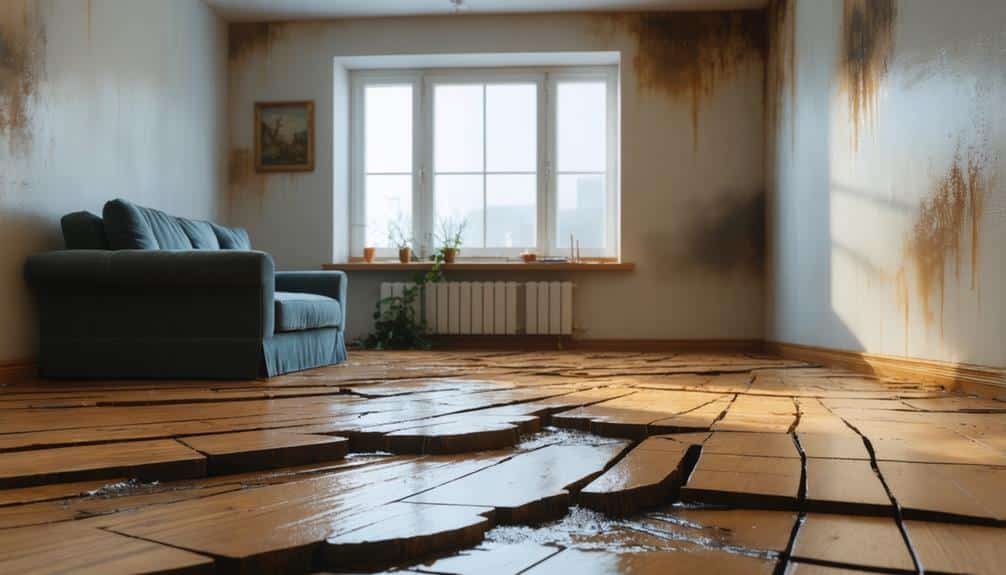
Warped or buckled floors can be a clear indicator of underlying water damage in your home. When you notice these deformities, it's vital to investigate further. Various flooring materials respond differently to moisture; hardwood, for example, is particularly susceptible. If the installation techniques weren't adequate, even minor water exposure can lead to significant damage.
Check for gaps between planks or tiles; this could signify that moisture has penetrated beneath the surface. Furthermore, observe the edges of your flooring—if you see raised or curled areas, it's a strong sign that water is at play. Improper sealing during installation can allow water to seep in, exacerbating the issue.
It's important to act promptly. If you can pinpoint the source of the moisture, you can mitigate further damage. Look for leaks in plumbing, roofing, or even condensation from HVAC systems. Understanding these signs empowers you to take control of your home's health. By addressing warped or buckled floors early, you not only protect your investment but also create a safer, more comfortable living environment. Always remember, a proactive approach is key to maintaining the integrity of your home.
Mold Growth
Along with warped or buckled floors, mold growth serves as another significant indicator of water damage in your home. When you notice mold, it often means there's hidden moisture that needs addressing. Mold can develop in various areas, particularly in damp spaces like bathrooms, basements, and around windows.
To effectively combat mold, it's vital to recognize its early signs:
- Discoloration on walls or ceilings
- An earthy, musty odor
- Peeling paint or wallpaper
- Visible mold patches, often green or black
Implementing preventive measures is critical to avoid extensive mold growth. Regularly inspect areas prone to moisture, guarantee proper ventilation, and address leaks promptly. If you find mold, don't ignore it. Mold remediation should be your priority to restore your home's safety and integrity. This process may involve cleaning, removing affected materials, and applying mold inhibitors to prevent future growth.
Excessive Humidity
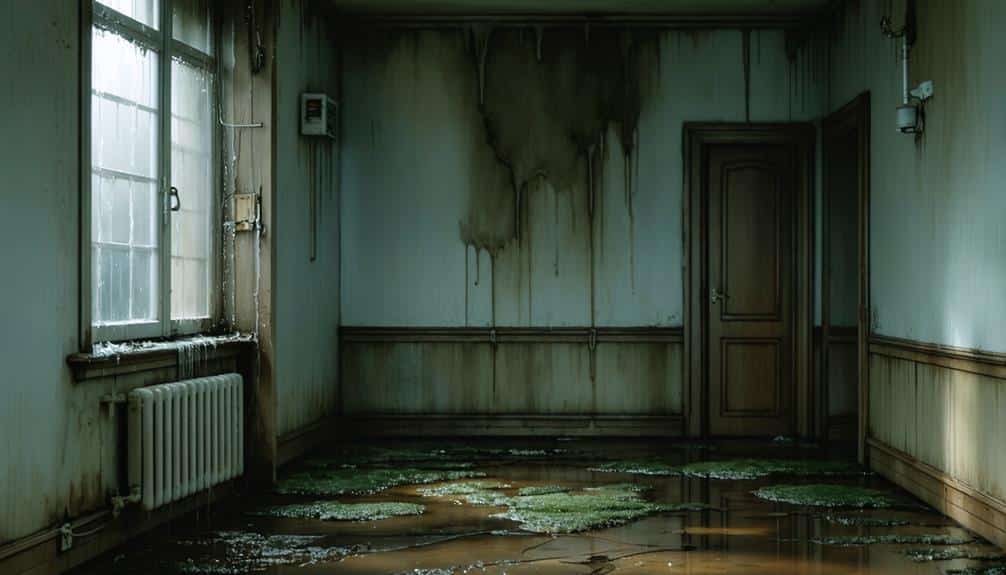
Excessive humidity often signals an underlying water issue that can lead to considerable damage if left unchecked. You may notice higher humidity levels in areas like basements, bathrooms, or kitchens, which are common moisture sources. These raised levels not only create discomfort but also promote an environment for mold and structural damage.
To manage humidity effectively, you need to implement proper humidity control measures. Start by using dehumidifiers in damp areas, confirming they're set to a comfortable level, typically between 30-50%. Regularly check windows and doors for leaks, as these can introduce additional moisture into your home.
Furthermore, be cautious about indoor activities that generate moisture, such as cooking or showering without proper ventilation. Installing exhaust fans can greatly reduce humidity levels and prevent potential water-related issues.
Moreover, inspect your plumbing for leaks, as even small drips can contribute to increased humidity. By addressing these moisture sources and maintaining suitable humidity levels, you safeguard your home against the hidden dangers of water damage and the costly repairs that follow. Taking proactive steps guarantees a healthier living environment, granting you peace of mind.
Water Stains on Baseboards
When you inspect your baseboards, look for any color changes that might indicate water damage, such as yellow or brown stains. You should likewise be aware of peeling paint or wallpaper, as these can signal prolonged exposure to moisture. Furthermore, if you notice a musty odor in the area, it could further confirm the presence of water damage.
Color Changes Indicate Damage
Water stains on baseboards often reveal underlying issues that require immediate attention. These stains may not just indicate water exposure but may reflect changes in color, which can signal the severity of the problem. Color psychology suggests that these hues can evoke feelings of urgency or concern, compelling you to act swiftly.
Look for these signs:
- Yellow or brown discoloration: Indicates prolonged moisture exposure.
- Dark streaks or patches: May point to mold growth or severe water leakage.
- Faded areas: Suggests previous water damage that hasn't been properly restored.
- Textural changes: A sign of swelling or degradation of materials.
Recognizing these color changes is crucial for the health of your home. You can utilize restoration techniques, such as drying out affected areas and replacing damaged materials, to mitigate further damage. Ignoring these signs may lead to more extensive repairs and potential health risks. By taking action when you spot water stains, you protect not just your home's structure, but also your peace of mind, ensuring a safe, liberated living space.
Peeling Paint or Wallpaper
Noticing peeling paint or wallpaper can be a clear indication of water damage lurking beneath the surface. When you see these signs, it's vital to investigate further, as they often indicate moisture accumulation that could lead to more severe issues. The paint or wallpaper may peel because of trapped moisture, which can weaken the bond and cause unsightly blisters. These water stains on baseboards can likewise serve as a visual cue, hinting at persistent moisture problems.
To maintain your home and prevent future damage, regularly inspect areas prone to moisture, like bathrooms, kitchens, and basements. When you spot peeling paint or wallpaper, act quickly—address the source of the moisture first, whether it's a leaky pipe, poor ventilation, or roof issues. After resolving the underlying problem, you can repair and repaint the affected areas.
Consistent home maintenance is vital for water damage prevention. By staying vigilant and addressing peeling paint or wallpaper promptly, you not only protect your home's structural integrity but additionally maintain its aesthetic appeal. Taking these proactive steps empowers you to safeguard your living space from further deterioration.
Musty Odors Presence
A musty odor in your home can be a telltale sign of underlying water damage, often linked to moisture accumulation. Identifying the odor sources is vital, as they can indicate where the water damage may be hiding. Pay attention to the following areas:
- Basements and crawl spaces: These damp environments often harbor hidden leaks.
- Behind appliances: Washing machines and dishwashers can develop unnoticed leaks.
- Around windows and doors: Poor sealing can let in moisture, leading to odors.
- Near plumbing fixtures: Check under sinks and around toilets for signs of leaks.
Once you've pinpointed the sources of the musty smell, consider remediation methods. This might involve drying out affected areas, repairing leaks, or even replacing damaged materials. Remember, ignoring these odors can lead to more serious issues, such as mold growth or structural damage.
Soft or Spongy Walls
When you touch your walls and feel a soft or spongy texture, it's vital to pay attention. This sensation often indicates underlying moisture issues that can compromise your home's structural integrity. Moisture detection is critical at this stage; if you notice this change in texture, it's time to investigate further.
Soft or spongy walls typically result from prolonged exposure to water, which can weaken the materials used in construction. Drywall, plaster, or wood may absorb moisture, leading to a deterioration that can affect the overall stability of your home. If you press against the wall and it feels unusually pliable, it may signify that the material is saturated and unable to support its intended load.
To guarantee your living space remains safe and sound, use moisture detection tools to pinpoint the source of the problem. This proactive approach will not just help you address current issues but likewise prevent future damage. Ignoring soft or spongy walls can lead to costly repairs and even health risks associated with mold growth. Stay vigilant and take action to protect your home's integrity.
Dripping or Leaking Pipes
Dripping or leaking pipes can quickly escalate from a minor annoyance to a significant problem, impacting both your home's structure and your finances. Ignoring these issues can lead to extensive damage and costly repairs. Effective pipe maintenance and prompt leak detection are vital to safeguarding your home.
Here are some signs to watch for:
- Water stains on ceilings or walls
- Mold growth in areas near pipes
- Unusual increases in your water bill
- Dampness around pipe fittings
Regular inspections of your pipes can help you identify problems early. Check for visible leaks under sinks, around appliances, and in basements. If you notice any signs of dripping or dampness, it's important to address them immediately. Not only does this protect your structure, but it too saves you money in the long run.
Utilizing leak detection tools can be helpful for hard-to-reach areas. You might even consider hiring a professional for a thorough inspection. Remember, maintaining your pipes is an investment in your home's integrity, allowing you to live freely without the weight of potential water damage.
Conclusion
While you might think your home's just aging gracefully, those subtle signs of water damage are like whispers of trouble waiting to shout. Discoloration and peeling paint might create a rustic charm, but they're more likely a cry for help. Ignoring musty odors and warped floors might seem harmless, yet they're the precursors to bigger issues. So, instead of admiring your "vintage" decor, it's time to play detective and tackle the underlying problems before they become overwhelming.
0 Comments