

To file a storm damage claim, start by evaluating the damage and taking detailed photos. Document your findings, including an inventory of damaged items and their value. Review your insurance policy to understand your coverage and any exclusions. Contact your insurance agent with all necessary documentation and submit your claim promptly. Get repair estimates from licensed contractors and keep copies for your records. Remember to follow up with your insurance adjuster for updates on your claim status. By following these steps, you can streamline the process and increase your chances of a successful claim. More insights await you as you proceed.
Key Takeaways
- Assess and document all visible and hidden storm damage with detailed notes and photographs for your claim.
- Review your insurance policy to understand coverage limits, exclusions, and deductibles before filing.
- Gather necessary documentation, including photos, repair estimates, and receipts, and submit your claim promptly.
- Obtain multiple repair estimates from licensed contractors to support your claim and ensure fair pricing.
- Follow up with your insurance adjuster regularly to check the status of your claim and address any issues.
Assessing the Damage
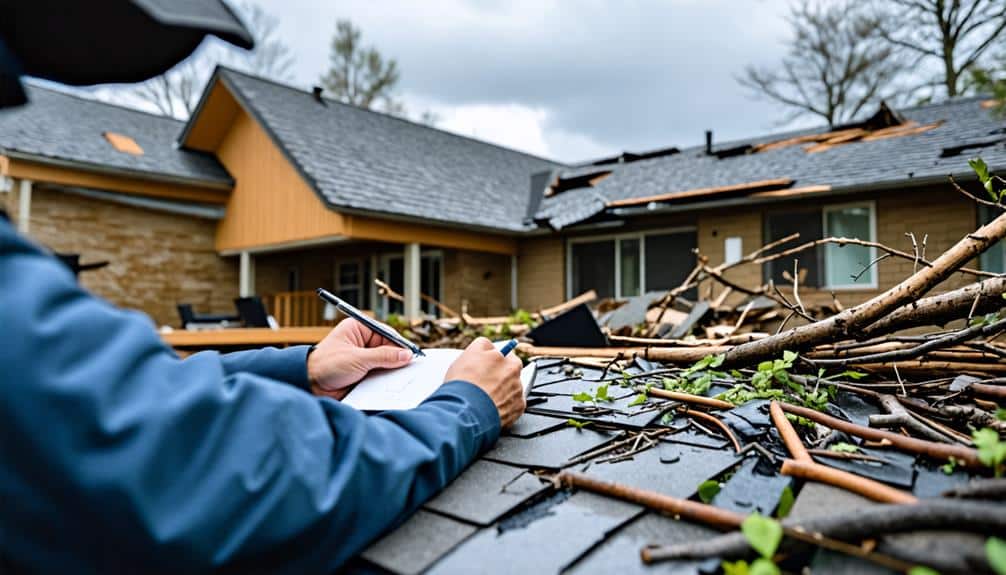
When it comes to evaluating the damage after a storm, it's vital to start both inside and outside your property. Begin your evaluation by inspecting the exterior for visible storm impact. Look for obvious damage types like missing shingles, broken windows, or damaged siding. These signs can indicate significant issues that may lead to further problems if left unaddressed.
Once you've thoroughly checked the outside, move indoors. Inspect ceilings and walls for water stains, cracks, or any signs of structural damage. You might as well find damaged electrical systems or appliances, which can pose serious safety hazards. Pay attention to your basement or crawl space; flooding can cause hidden damage types that worsen over time.
While appraising the damage, take detailed notes and photographs to document each issue. This will help you understand the full extent of the storm impact on your property. Remember, identifying both major and minor damage types is vital for filing an accurate insurance claim. By being diligent in your evaluation, you guarantee that you're well-prepared to address repairs and support others in similar situations.
Documenting Evidence
Thorough documentation is vital for a successful storm damage claim. To build a strong case, start by gathering photographic evidence of the damage. Capture clear images from multiple angles, showing the extent of the destruction. Make certain to include any affected areas both inside and outside your property. These photos will serve as significant proof when you file your claim.
Next, create a detailed inventory of all damaged items. List each item, describing its condition and value before the storm. Include receipts or purchase records when possible, as these can support your valuation. If you have items that are irreparable, note their replacement costs.
Additionally, remember to document any additional damages, such as structural issues or landscaping loss. This all-encompassing approach not only strengthens your claim but also guarantees you don't overlook any losses.
Reviewing Your Policy
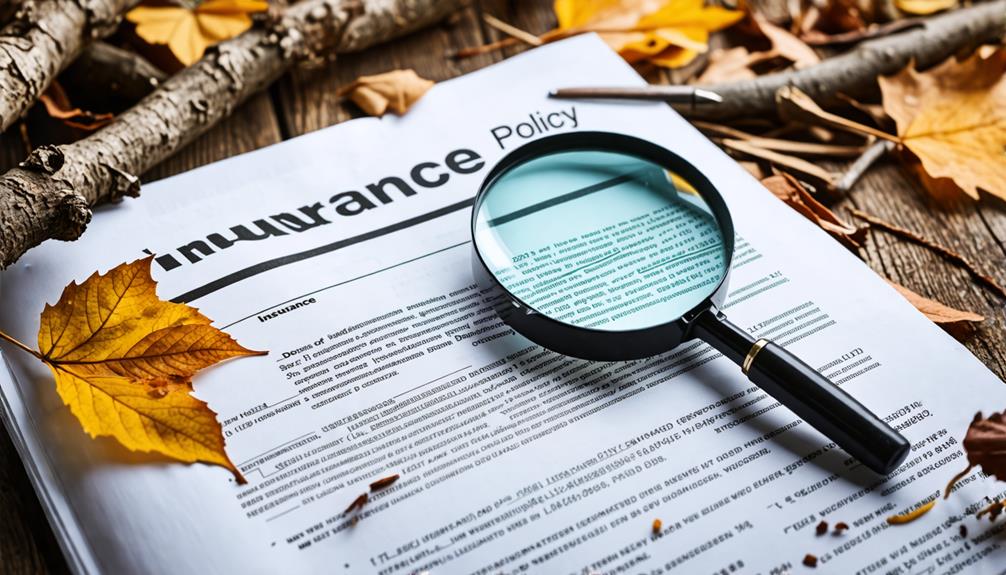
Understanding your insurance policy is crucial before filing a storm damage claim. Start by reviewing your coverage details. Make sure you know what types of damage your policy covers and any specific policy exclusions that might apply. For instance, some policies may not cover damage from flooding or certain natural disasters.
Next, familiarize yourself with your claim limits. This is the maximum amount your insurance provider will pay for damages. Knowing these limits helps you set realistic expectations for your claim. If your damages exceed these limits, you may need to investigate additional financial options.
Also, pay attention to any deductibles you must meet before coverage kicks in. This is the amount you'll need to cover out of pocket. Understanding these aspects will empower you to navigate the claims process more effectively.
Contacting Your Insurance Agent
Before reaching out to your insurance agent, gather all necessary documentation related to the storm damage. This includes photos, receipts, and any relevant details about your policy coverage. Understanding your coverage will help you ask informed questions and streamline the claims process.
Prepare Necessary Documentation
When filing a storm damage claim, preparing the necessary documentation is crucial for a smooth process. Start by gathering all relevant information about the damage. Take clear photographs of the affected areas, as visual evidence can strengthen your claim. Document any personal belongings that are damaged or destroyed, including receipts or inventory lists.
Next, consult your insurance terminology guide. Familiarizing yourself with common terms can help you communicate effectively with your insurance agent. This understanding will guarantee you don't miss any critical details when discussing your claim.
Keep a detailed record of all communication with your insurance agent. Note dates, times, and the names of individuals you speak with. This documentation can be invaluable if any disputes arise later.
Lastly, follow these claim submission tips: submit your claim as soon as possible, and verify you've filled out all necessary forms accurately. A well-prepared claim package not only expedites the process but also increases the likelihood of a favorable outcome. By taking these steps, you're setting yourself up for success in maneuvering the claim process.
Understand Your Policy Coverage
Your insurance policy is the key to knowing what storm damage is covered and what isn't, so it's vital to review it thoroughly. Start by identifying your policy limits; these define the maximum amount your insurer will pay for covered losses. Understanding these limits will help you gauge how much financial support you can expect after a storm.
Next, pay close attention to coverage exclusions. These are specific situations or types of damage that your policy won't cover, and they can vary greatly between policies. For example, some policies may exclude damage caused by flooding or neglect, leaving you at risk if a storm leads to these issues.
Once you've grasped your policy's terms, reach out to your insurance agent. They can provide clarity on any confusing aspects and guarantee you fully understand your coverage. This conversation is vital, especially if you need to make adjustments or add riders for better protection.
Filing the Claim
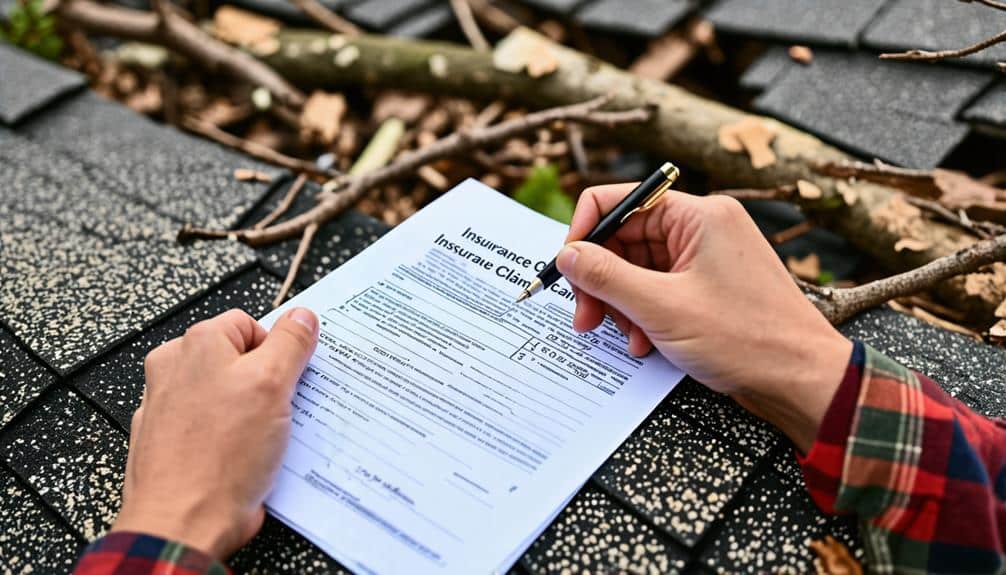
Filing a storm damage claim requires careful attention to detail to guarantee a smooth process. Start by gathering all necessary documentation, including photographs of the damage, repair estimates, and any relevant receipts. These elements are crucial for supporting your claim. When you're ready to submit, follow your insurer's claim submission tips closely. This may include filling out specific forms or using their online portal.
Before submitting, double-check your policy to verify the damages are covered. If you've implemented storm preparedness strategies, such as securing your property, be certain to mention these in your claim. They demonstrate your proactive approach and might influence how your insurer views your situation.
After compiling your information, submit your claim as soon as possible. Timeliness can affect your claim's approval, so don't delay. Keep copies of everything you send for your records. This not only helps you stay organized but also provides proof of your claim submission date, should any disputes arise later. By following these steps, you can improve the likelihood of a successful claim and guarantee that you receive the assistance you need to recover from the storm's impact.
Following Up on the Claim
After submitting your storm damage claim, it's vital to follow up to verify it's being processed. A diligent claim follow-up not only keeps you informed but likewise demonstrates your commitment to resolving the issue. Use effective communication strategies to guarantee your concerns are addressed promptly.
Start by reaching out to your insurance adjuster or representative. Here are some tips to guide your follow-up:
- Set a timeline: Ask when you can expect updates on your claim status.
- Document interactions: Keep a record of all conversations and correspondence for future reference.
- Be proactive: Regularly check in, especially if you haven't heard back within the agreed timeframe.
- Express your concerns: Clearly communicate any urgent needs or questions you may have regarding the claim process.
Getting Estimates for Repairs
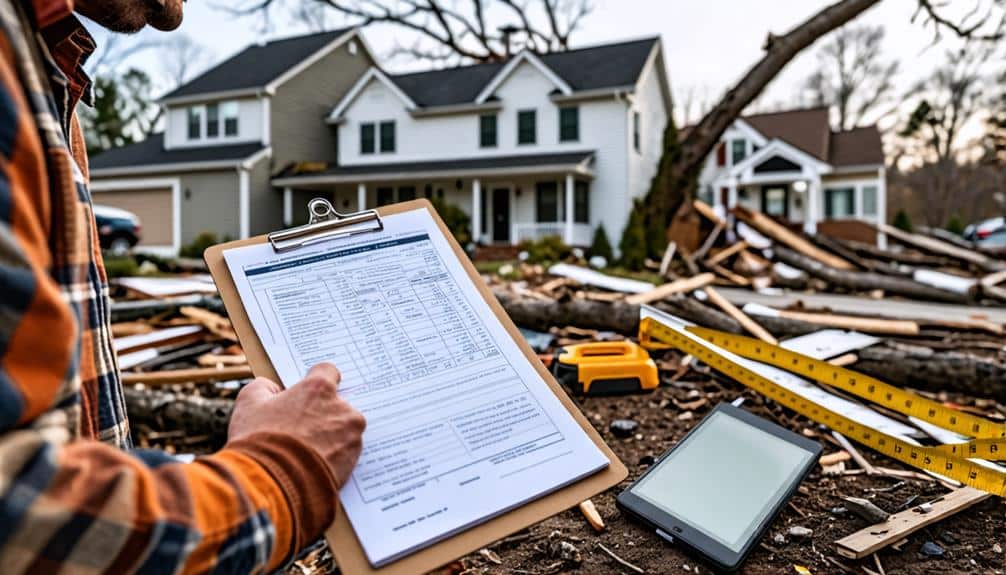
Once you've confirmed that your storm damage claim is being processed, it's time to get estimates for the necessary repairs. Getting multiple estimates can help you understand the repair cost and assist in your contractor selection. Start by reaching out to licensed contractors who have good reviews and experience with storm damage.
Here's a simple table to guide you through the process:
| Step | Description |
|---|---|
| Research Contractors | Look for licensed and insured professionals. |
| Request Estimates | Contact at least three contractors for a detailed estimate. |
| Compare Costs | Evaluate the estimates for fairness and transparency. |
| Make Your Selection | Choose a contractor based on quality, trust, and repair cost. |
When evaluating estimates, verify they include a thorough breakdown of costs and timelines. This will not only help you in making a well-informed choice but additionally guarantee that your home gets the quality repairs it needs. Remember, taking the time to select the right contractor can make all the difference in the outcome of your repairs.
Understanding Claim Denials
Understanding why your claim might be denied is essential for maneuvering the process effectively. Common reasons for denials include insufficient documentation or coverage issues that you may not be aware of. If you face a denial, knowing how to appeal it can help you secure the compensation you deserve.
Common Denial Reasons
Claim denials can be frustrating and confusing, especially when you've faced the aftermath of a storm. Understanding common reasons for these denials can help you navigate the claim process more effectively. Here are some frequent denial reasons to keep in mind:
- Insufficient Documentation: Incomplete or missing paperwork can lead insurers to deny your claim.
- Policy Exclusions: Some damages may not be covered under your specific policy, so knowing what's included is essential.
- Late Filing: Submitting your claim past the deadline can result in an automatic denial.
- Pre-existing Damage: If the insurer determines that the damage existed before the storm, your claim could be rejected.
To avoid these pitfalls, consider implementing denial prevention strategies. Familiarize yourself with your insurance policy and keep records of all communications. When filing, use claim process tips like documenting the damage with photos and obtaining repair estimates. These steps can make a significant difference in ensuring your claim is accepted, allowing you to focus on recovering from the storm instead of dealing with denial frustrations.
Appealing a Denial
Frustration often accompanies the process of appealing a denial from your insurance company, but knowing how to navigate this challenge can lead to a more favorable outcome. Start by thoroughly reviewing your denial letter. Understanding the reasons for the denial helps you shape your response effectively.
Next, gather all relevant documentation. This includes your original claim, any correspondence with the insurance company, and supporting evidence like photos and repair estimates. Strong, clear evidence can strengthen your case during the appeal process.
Once you've compiled your materials, write a formal appeal letter. In this letter, clearly state why you believe the denial was unjustified. Use your documentation to back up your arguments.
Additionally, consider employing specific appeal strategies. These might include contacting your insurance agent for clarification or seeking expert opinions from public adjusters or legal professionals. Their insights can provide valuable perspectives on your claim process.
Lastly, remain persistent. If your first appeal is denied, don't give up. You can request a reassessment or escalate the issue to a regulatory body. With determination and a strategic approach, you improve your chances of overturning the denial.
0 Comments