

If you need urgent restoration for quick water damage recovery in McDonough, start by evaluating the source of water. Is it clean or contaminated? Prioritize safety by turning off the electricity and wearing protective gear. Quickly extract standing water using a wet/dry vacuum, then dry out the space with fans and dehumidifiers. For effective restoration, consider professional services that conduct thorough evaluations and utilize specialized equipment to address structural issues and prevent mold growth. Remember to document all damage for insurance claims. You’ll find additional tips and strategies for effective recovery and prevention ahead.
Assessing Water Damage
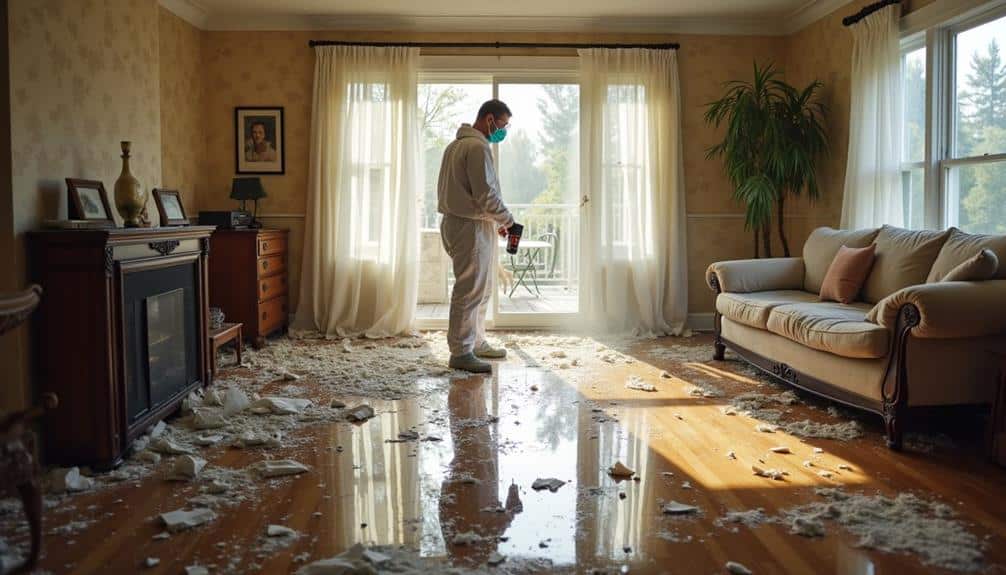
When it comes to water damage recovery, gauging the extent of the damage is crucial. You must start with water source identification, as this step determines your recovery strategy. Is the water from a clean source, like a broken pipe, or is it contaminated, such as floodwater? Understanding the source helps in evaluating the potential hazards involved.
Once you identify the water source, proceed with damage severity assessment. Begin by inspecting the affected areas, including walls, floors, and personal belongings. Look for signs like discoloration, mold, or warping. Use moisture meters to quantify the water saturation levels in various materials. This data will guide your drying process and inform whether you need to remove any irreparably damaged items.
Documenting your findings is crucial for insurance claims and future reference. Take photographs and keep written notes on the affected areas and the extent of the damage. By thoroughly evaluating both the water source and the damage severity, you’re positioning yourself for an effective recovery plan. Prioritize these evaluations to streamline your restoration efforts and minimize further complications down the line.
Safety Precautions to Take
Safety precautions are vital during water damage recovery to protect both your health and property. Start by evaluating any electrical hazards. Water and electricity don’t mix, so make certain to turn off the main power supply before entering affected areas. Use a moisture meter to identify wet spots and avoid contact with standing water, as it may be electrified.
Next, focus on mold prevention. Mold can develop within 24-48 hours in damp conditions, so it’s important to act quickly. Wear protective gear, including gloves and masks, to avoid inhaling spores or coming into contact with contaminated materials. Guarantee proper ventilation in the affected area by opening windows and using fans, if safe to do so.
Lastly, evaluate structural integrity before moving or removing items. Look for sagging ceilings or unstable flooring, and avoid areas that seem compromised. Always prioritize safety over salvage. By following these precautions, you minimize health risks and protect your property from further damage, setting a solid foundation for effective recovery.
Immediate Response Steps
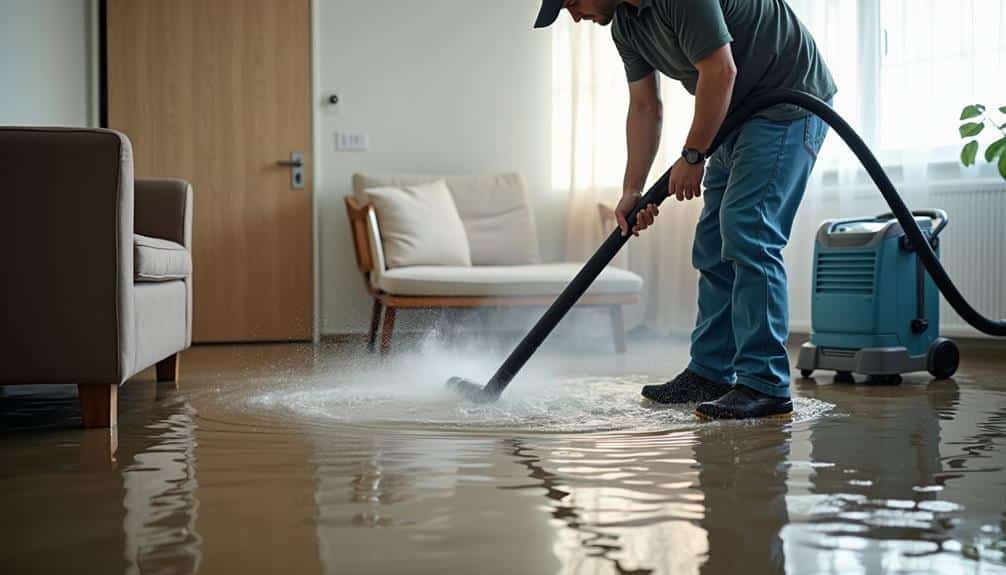
Taking immediate action is crucial after experiencing water damage to minimize long-term effects. First, verify your safety by turning off the electricity in affected areas. If you’ve prepared an emergency kit, grab it now; it should contain necessities like gloves, masks, and a flashlight. Next, assess the damage to identify the source of the water. If it’s from a burst pipe, shut off the main water supply to prevent further flooding.
Once you’ve secured the area, begin water extraction. Use a wet/dry vacuum to remove standing water, focusing on high-risk areas like basements and crawl spaces. The quicker you extract water, the less likelihood of mold growth or structural damage. After extraction, thoroughly dry out the space using fans, dehumidifiers, and open windows, if conditions permit.
Document the damage with photos for insurance purposes, confirming you have a detailed record of everything affected. Finally, guarantee proper ventilation to assist drying and prevent musty odors. By following these immediate response steps, you can greatly reduce the impact of water damage in your home.
Professional Restoration Services
Engaging professional restoration services can greatly improve your recovery process after water damage. These experts employ effective emergency response strategies and advanced restoration techniques to restore your property efficiently. Here’s how they can assist you:
- Assessment: They conduct a thorough evaluation of the damage, identifying affected areas and moisture levels.
- Water Extraction: Utilizing specialized equipment, they remove standing water quickly, minimizing further damage.
- Drying & Dehumidification: They implement drying strategies to eliminate moisture from surfaces and the air, preventing mold growth.
- Restoration: Finally, they repair and restore your property, addressing structural issues and replacing damaged materials.
Preventing Future Water Damage
Restoration services not only help you recover from water damage but furthermore provide valuable insights into preventing future incidents. To safeguard your property, you must implement effective drainage solutions and waterproofing techniques. Start by evaluating your property’s grading; verify it slopes away from the foundation to promote proper water runoff. Installing French drains can notably mitigate water accumulation around your home.
Next, review your gutters and downspouts. Regular maintenance is vital—clean them frequently to prevent blockages. Extend downspouts at least six feet away from your foundation, directing water away from vulnerable areas.
Consider incorporating waterproofing techniques, such as applying sealants to basement walls and floors. This creates a barrier against moisture penetration. Furthermore, use sump pumps in basements prone to flooding, guaranteeing you have a reliable way to remove excess water.
Lastly, inspect plumbing fixtures regularly. Address leaks promptly, as even minor issues can escalate into considerable water damage. By proactively implementing these strategies, you’ll not only minimize the risk of future water damage but also improve your property’s overall resilience. Invest in prevention today to protect your home tomorrow.
Insurance Considerations
How can you guarantee that you’re adequately covered when water damage strikes? Understanding your insurance policy is essential for maneuvering the claim process effectively. Here’s a quick checklist to make certain you’ve got the right policy coverage:
- Review Your Policy: Familiarize yourself with what’s covered. Standard homeowner’s insurance often includes water damage from sudden incidents, but not from neglect.
- Understand Exclusions: Identify any exclusions in your policy. Flooding, for instance, typically requires separate flood insurance.
- Document Everything: Keep records of your property’s condition and any damage. This documentation will streamline the claim process and support your case.
- Consult Your Agent: Don’t hesitate to ask your insurance agent about specifics. Clarifying details can prevent surprises during a claim.
Conclusion
In McDonough, it’s essential to act quickly after water damage, as delays can lead to mold growth within just 24 to 48 hours. By following safety precautions and taking immediate steps, you can minimize damage and protect your property. Professional restoration services can provide expertise and efficiency, ensuring a thorough recovery. Remember, investing in preventive measures can save you time and money in the long run. Don’t wait—stay proactive and safeguard your home against water damage.
0 Comments