

After a storm, you need to act quickly on structural repairs to protect your home. Start by evaluating roof damage for missing shingles or leaks. Next, secure windows and doors by boarding them and reinforcing frames. Inspect and repair any damaged structural walls using steel braces and moisture barriers. Don't overlook foundation issues; check for cracks and address drainage concerns promptly. Finally, implement temporary weather protection with waterproof tarps to minimize further damage. Taking these immediate steps is vital for safety and stability, and there's more essential information to contemplate for thorough post-storm recovery.
Key Takeaways
- Assess roof damage promptly, focusing on missing shingles and leaks; use tarps for temporary coverage until repairs are made.
- Secure windows and doors by boarding them with plywood and reinforcing with caulk to prevent water intrusion and enhance security.
- Evaluate and repair structural walls using steel braces or carbon fiber strips to restore stability and prevent future issues.
- Inspect and address foundation cracks, consulting engineers if necessary, and implement drainage solutions to prevent water accumulation.
- Regularly check and maintain temporary weather protections like tarps to ensure they remain effective during subsequent storms.
Assessing Roof Damage
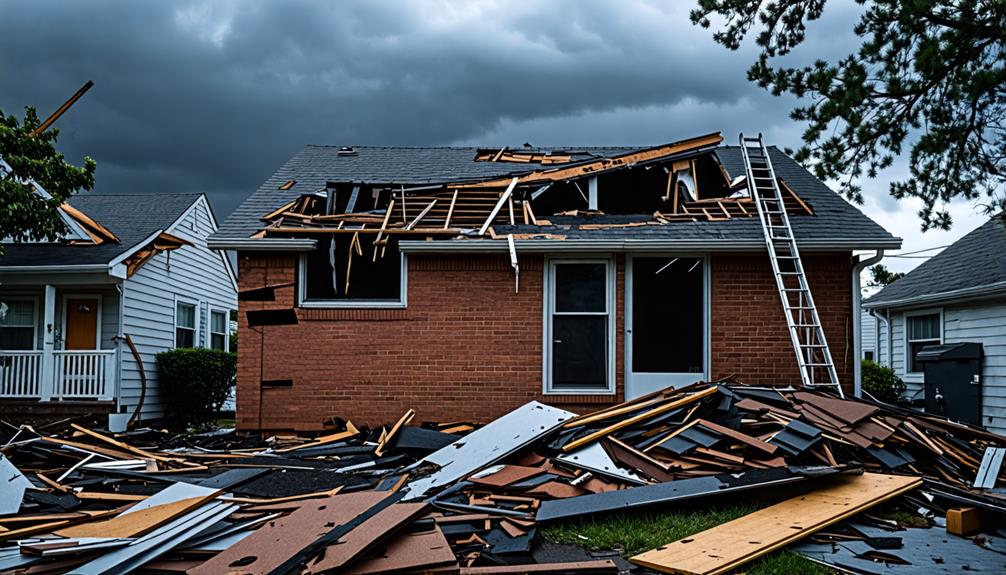
After severe storms, you should promptly assess roof damage to determine the extent of repairs needed. Start with a thorough roof inspection, focusing on visible signs of damage such as missing shingles, leaks, or structural deformations. Use binoculars for a safer distance view, and take notes or photographs to document findings.
During your damage assessment, check the condition of flashing, gutters, and ventilation systems. Look for debris accumulation that could cause water pooling, leading to further deterioration. Pay particular attention to areas around chimneys and vents, as these are common points of failure.
If you notice significant damage, consider consulting a professional for a more detailed evaluation. They can provide insights on the integrity of underlying structures and potential hidden issues that may not be immediately visible.
Securing Windows and Doors
A thorough examination and reinforcement of windows and doors is crucial for protecting your home from further storm damage. Start by inspecting each window and door for cracks, gaps, or any signs of weakness. If you notice vulnerable areas, consider window boarding as a temporary yet effective solution. Use plywood sheets to cover windows, securing them with heavy-duty screws or brackets to withstand high winds and debris.
Next, focus on door bracing. Reinforce exterior doors with diagonal bracing, which can prevent them from being forced open by strong gusts. Install a sturdy brace from the top hinge to the bottom latch, ensuring it's tightly secured and able to absorb impact. In addition, check the integrity of locks and hinges; replace any that show signs of wear.
Don't overlook the importance of sealing any gaps around frames with weather-resistant caulk. This not only improves security but similarly helps maintain temperature control inside your home. By taking these proactive steps in securing windows and doors, you greatly reduce the risk of further damage and promote the safety of your living environment during storm recovery.
Repairing Structural Walls
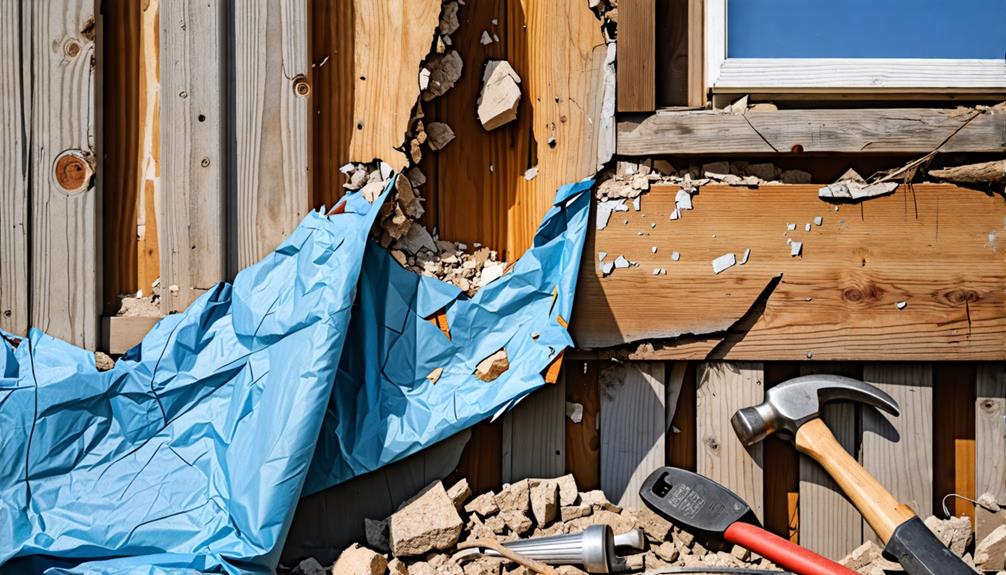
Structural walls are essential components of your home's integrity, and evaluating their condition is important after storm damage. Start by examining for cracks, bulges, or any signs of structural failure. If you notice significant damage, immediate action is necessary to prevent further deterioration.
Implementing wall reinforcement techniques is imperative to restore stability. This might involve using steel braces or carbon fiber strips to strengthen weakened areas. In addition, verify that any compromised areas are properly repaired to withstand future storms.
Another important step is moisture barrier installation. Storms often introduce excessive moisture, which can lead to mold and further structural issues. By installing a high-quality moisture barrier, you'll protect your walls from water infiltration and preserve the integrity of your home.
Consider consulting with a structural engineer to assess the extent of the damage and recommend appropriate repairs. They can provide expert guidance on the best materials and methods to use, guaranteeing that your repairs are effective and long-lasting. Taking these steps not only restores your home but likewise helps prevent future problems, ultimately serving the safety and comfort of your family.
Addressing Foundation Issues
Following the evaluation of structural walls, addressing foundation issues is the next critical step in guaranteeing your home's stability. After severe storms, foundation cracks may appear, signaling potential problems that need immediate attention. These cracks can compromise the integrity of your home and may indicate underlying soil erosion, which can destabilize the entire structure.
Begin by inspecting your foundation for any visible cracks. Pay close attention to their size and direction; horizontal cracks can be more concerning than vertical ones, as they often signal pressure from shifting soil. If you notice significant or expanding cracks, it's crucial to consult a structural engineer to assess the severity of the issues.
Furthermore, evaluate the surrounding environment for signs of soil erosion. Stormwater runoff can wash away soil, weakening your foundation's support. Implementing drainage solutions like French drains or grading can help redirect water away from your foundation, reducing the risk of further erosion.
Addressing these foundation issues promptly not only preserves your home's structural integrity but also guarantees the safety of those within it. Taking proactive measures now can prevent costly repairs later, serving your home and its occupants well.
Temporary Weather Protection

How can you effectively shield your home from further damage after a storm? The answer lies in temporary weather protection. Start by evaluating your roof for leaks or missing shingles. If you detect any issues, emergency roofing measures become vital. Implement tarps installation to cover vulnerable areas. Use durable, waterproof tarps that can withstand harsh elements. Secure the tarps with heavy-duty materials like plywood and weights to prevent them from being blown away.
When you install tarps, make certain they extend beyond the damaged areas to provide adequate coverage. This technique not only shields your interior from rain but also prevents additional deterioration. Check the tarps regularly, especially during inclement weather, to verify they remain intact and effective.
Furthermore, consider reinforcing entry points, such as doors and windows, with plywood. This added layer of protection minimizes the risk of water intrusion and debris damage. Remember, these temporary measures are vital while you arrange for professional evaluations and permanent repairs. Acting swiftly can make a significant difference in preventing long-term damage, guaranteeing you safeguard your home and serve your community effectively.
0 Comments