

To estimate storm damage repair costs, start by evaluating the type of storm and resultant damage. Inspect roofs for missing shingles or leaks, and check structural integrity for cracks or bulging. Take thorough notes and photographs to document all findings. Gather multiple contractor estimates, breaking down costs into labor, materials, and additional expenses like debris removal. Understand your insurance policy's coverage limits and deductibles to gauge financial responsibility. This analytical approach guarantees you account for all necessary repairs and potential costs effectively. There's more crucial information that can aid in your evaluation process.
Key Takeaways
- Identify the type of storm damage to assess specific repair needs and costs accurately.
- Conduct thorough inspections of the roof, structure, and foundation to evaluate damage severity.
- Document all damage with photos and notes to support insurance claims and repair estimates.
- Gather multiple contractor estimates to compare labor and material costs effectively.
- Understand your insurance policy coverage, including limits and deductibles, to manage financial expectations.
Understanding Storm Damage Types

Storm damage types vary greatly, often resulting in different repair needs and costs. Understanding these types can help you serve your community better when disaster strikes. The two primary types of storms that cause damage are hurricanes and tornadoes. Each brings unique challenges and destruction patterns.
Hurricanes typically result in wind and flooding damage. You might see roof loss, siding damage, and water intrusion, all of which require specific repair strategies. Conversely, tornadoes generate concentrated, intense winds that can tear roofs off and cause significant structural damage. The impact of a tornado is often more localized but can be extremely devastating.
Additionally, hail storms can lead to roof punctures and window breakage, while winter storms may cause ice dams and additional load on roofs. By recognizing these storm damage types, you can assess the scope of the repairs needed more effectively.
It's essential to document any damage thoroughly and take immediate action to prevent further issues. The more informed you are about the types of storms and their associated damages, the better equipped you'll be to assist those in need during their recovery efforts.
Assessing Roof Damage
When evaluating roof damage, it's crucial to conduct a thorough inspection to identify the extent of the issues. A detailed roof inspection helps you pinpoint specific areas needing attention, guaranteeing an accurate damage assessment. Follow these steps to aid your inspection:
- Visual Examination: Look for missing shingles, cracks, or sagging areas. Pay attention to the roof's overall appearance.
- Check for Leaks: Inspect the interior for water stains or mold growth, which can indicate roof leaks. This is vital for understanding potential water damage.
- Examine Flashing: Verify that the flashing around chimneys, vents, and skylights is intact. Damaged flashing can lead to significant leaks.
- Assess Gutter Condition: Clogged or damaged gutters can cause water to back up, leading to roof damage. Make certain they are free of debris and functioning properly.
Evaluating Structural Integrity

When evaluating structural integrity after a storm, you need to assess visible damage throughout the property, focusing on areas like walls and beams. It's vital to inspect the foundation stability to identify any shifts or cracks that could compromise the building's overall safety. By thoroughly examining these aspects, you can better understand the necessary repairs and their associated costs.
Assessing Visible Damage
Visible damage often serves as the primary indicator of a structure's integrity following severe weather events. By identifying and evaluating these visual damage indicators, you can determine the extent of required repairs and prioritize your actions effectively. Start by conducting a thorough inspection of the affected areas, focusing on the following key elements:
- Roofing: Look for missing shingles, punctures, or sagging sections that could compromise the structure.
- Walls: Check for cracks, bulging, or peeling paint, which may signal underlying issues.
- Windows and Doors: Examine for broken glass, warped frames, or gaps that could lead to water intrusion.
- Exterior Features: Inspect decks, porches, and other attachments for signs of damage that could affect overall stability.
As you gather this information, consider developing repair prioritization strategies. Address immediate safety concerns first, followed by structural repairs, and finally cosmetic fixes. This systematic approach guarantees you maintain a safe environment while effectively managing repair costs. Remember, clear documentation of visible damage will assist in insurance claims and further evaluations.
Inspecting Foundation Stability
Inspecting foundation stability is vital after severe weather events, as even minor shifts can lead to significant structural issues. Begin by examining your foundation for visible signs of distress, like foundation cracks. These cracks can indicate underlying problems, such as soil erosion or shifts caused by heavy rainfall or flooding. Measure the size and width of any cracks; wider cracks may require professional assessment.
Next, assess the surrounding environment. Look for signs of soil erosion, which can undermine the foundation's support. Check for areas where the soil has washed away, creating voids around the foundation. Pay attention to drainage patterns, as poor drainage can worsen erosion and lead to further instability.
Additionally, inspect the interior of your home. Look for doors and windows that stick or don't align properly, which may signal uneven settling. If you notice multiple signs of instability, it's vital to consult with a structural engineer. They can provide a thorough evaluation and recommend necessary repairs. By taking these steps, you can help guarantee the safety and longevity of your home following storm damage.
Estimating Repair Costs
Estimating repair costs after a storm requires a systematic approach to confirm accuracy and completeness. To effectively conduct your repair cost estimation, you should utilize damage assessment techniques that help evaluate the extent of the destruction. Follow these steps to confirm a thorough evaluation:
- Document Damage: Take clear photos and notes of all affected areas. This provides a visual reference that can assist in discussions with contractors later.
- Assess Structural Integrity: Examine the foundation, walls, and roof for any signs of serious damage. Engaging a professional may be necessary for a detailed evaluation.
- Gather Estimates: Contact multiple contractors to obtain detailed estimates. Confirm they break down costs by labor, materials, and any necessary permits.
- Account for Additional Expenses: Consider costs like debris removal, temporary housing, and potential increases in material prices because of demand.
Insurance Considerations
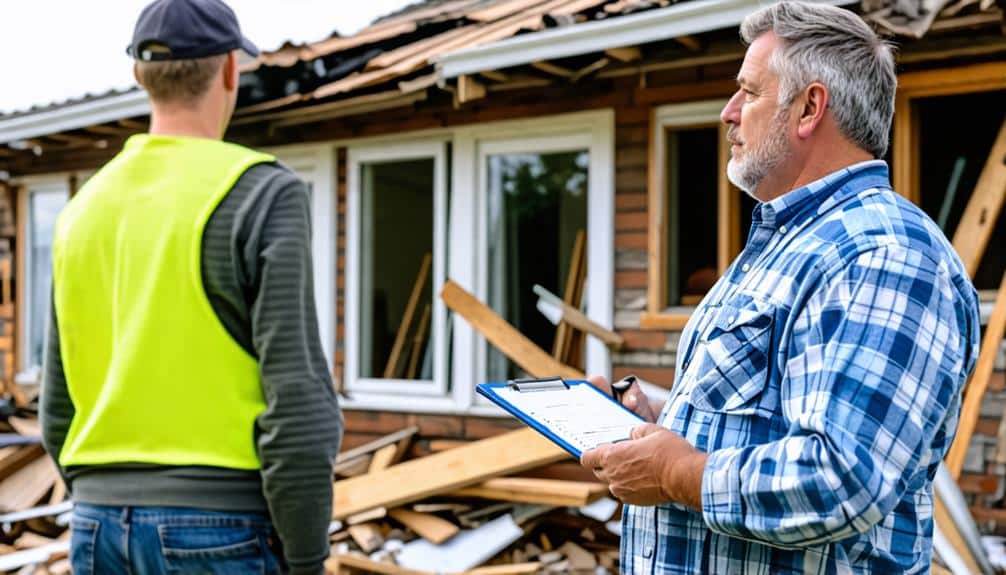
When evaluating storm damage, it's essential to understand your insurance policy coverage, as this will dictate what repairs are eligible for reimbursement. Proper documentation of the damage is similarly important, as it supports your claim and guarantees you receive the compensation you deserve. By maneuvering through these considerations carefully, you can streamline the repair process and mitigate potential financial burdens.
Understanding Policy Coverage
Maneuvering the complexities of insurance policies can feel overwhelming, especially after experiencing storm damage. To effectively understand your coverage, it's vital to dissect your policy and identify key elements that can impact your repair costs. Here are four fundamental aspects to take into account:
- Policy Limits: Know the maximum amount your insurer will pay for repairs. This can greatly affect your financial responsibility post-damage.
- Coverage Exclusions: Familiarize yourself with what isn't covered under your policy. Common exclusions may include certain types of water damage or damage from specific natural disasters.
- Deductibles: Understand the amount you'll need to pay out-of-pocket before your insurer covers any costs. This can vary based on the type of claim.
- Additional Living Expenses (ALE): If you can't live in your home because of repairs, check if your policy provides coverage for temporary housing and related costs.
Documenting Damage Properly
Documenting storm damage is vital for a successful insurance claim. Start by gathering photographic evidence of all affected areas. Take clear, detailed pictures from multiple angles, making sure you capture both the extent of the damage and any unique features that might aid in your claim. This visual documentation will serve as a significant reference for your insurance adjuster.
Next, utilize damage checklists to systematically assess the impact on your property. These checklists can help you identify and categorize damage to your home's structure, roof, windows, and landscaping. By methodically evaluating each area, you can make certain that no damage goes unreported.
As you compile your documentation, keep a running record of the dates and times you take photographs and make notes about any conversations with contractors or adjusters. This timeline can provide context and support your claim's legitimacy.
Finding Qualified Contractors
Finding qualified contractors can greatly influence the efficiency and quality of your storm damage repairs. To guarantee you select a contractor who can meet your needs, consider the following steps:
- Verify Contractor Qualifications: Check for licenses, insurance, and certifications. These credentials demonstrate that the contractor adheres to industry standards and regulations.
- Request Contractor References: Ask for a list of previous clients and contact them. This will provide insight into the contractor's workmanship, reliability, and professionalism.
- Obtain Multiple Estimates: Don't settle for the first quote. Collect estimates from several contractors to compare pricing and services. This will help you gauge the market rate and make a more educated choice.
- Evaluate Communication Skills: Pay attention to how promptly and clearly the contractor communicates. Effective communication is vital for guaranteeing that your expectations are understood and met throughout the repair process.
0 Comments